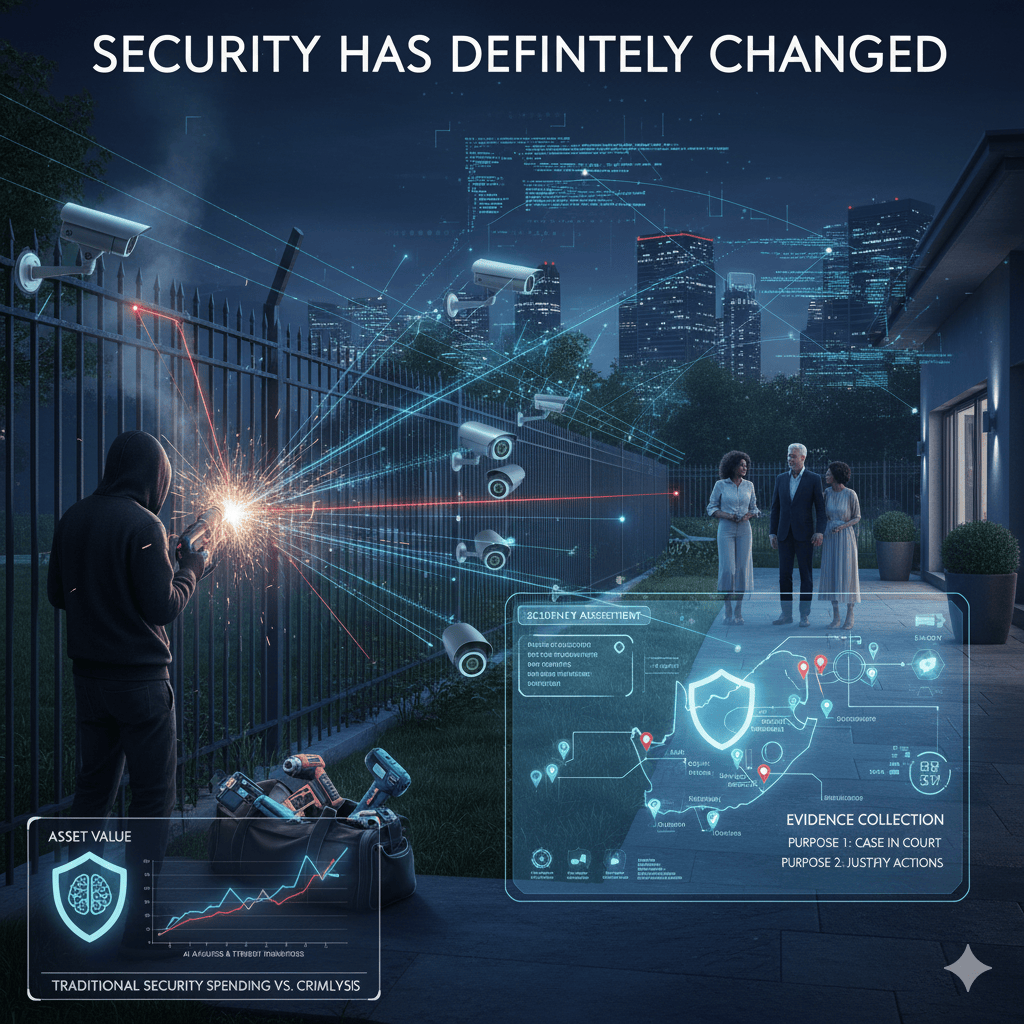
Security has changed in fundamental ways over the past five years.
Traditional physical barriers no longer offer the protection people once trusted. Modern cutting tools, powered by batteries or hydraulics and small enough to carry in a backpack, can defeat most manmade structures. Criminals have also become more connected and more determined, often communicating better than homeowners, estates, and even many organizations. Their commitment to reaching their goal is stronger than the commitment of those who must stop them, especially when cost concerns or a limited view of human life influence security decisions.
These changes force us to rethink how we measure security. Many people cannot explain the true value of their assets or how they should protect them. You measure security through a risk assessment, which investigates your entire security portfolio and identifies the risks that lead to crime. Understanding the value of security begins with understanding the value of the asset, a process that requires far more depth than most realize.
The environment we operate in has shifted.
Old systems fail because they are no longer suited to modern threats. Artificial intelligence plays a growing role.It helps detect suspicious behavior faster but also challenges how courts accept evidence. Everything now depends on how you collect that evidence. In South Africa, you must justify why your actions were necessary, which means the evidence you provide must support both your case and your decisions.
Courts increasingly require original master copies of footage. Without them, evidence may be rejected. Many security portfolios lack essential functions. Communication is weak, instructions fail, and evidence collection is handled poorly. Cameras alone do not provide security. Their value depends on where the footage goes and how you respond to it.
Although private companies spent R60 billion on security last year, crime continues to rise.
This proves that spending more does not guarantee safety. Only an independent security risk assessment can uncover the actual risks and provide meaningful answers. Prevention remains the best approach. Once criminals gain access to confidential information, the damage can last for years. Without proper evidence, most South Africans cannot pursue justice or recover from major crimes. Understanding your risk is the foundation of real security.