Independence is a big deal in security risk assessment

security risk assessment Gauteng – Let’s start with what it means. Independence means we do not work for or answer to any security company, manufacturer, or risk company. We are completely separate. Think of us as the referee, not the player. At Alwinco, we don’t sell security products, software, or hardware. We don’t provide security services. We don’t even do risk assessments on behalf of a security company. Why? That’s because our independence would be compromised. If we were working under a security company’s name, our recommendations might be influenced by their business needs. That’s not what we do. When we conduct a risk assessment, we assess the client directly. This step is important. If we were assessing a security company’s client on their behalf, then we would have to take their instructions into account. This could significantly alter the assessment’s focus. The assessment could become more about what suits the security company’s offerings rather than what truly reduces risk. That’s not an independent assessment.
We recently conducted an independent security risk assessment for a residential estate in Nelspruit, identifying vulnerabilities that are frequently missed during traditional assessments. Our independent insight allowed us to recommend targeted solutions to improve the safety of residents and enhance the estate’s overall security framework.
If you would like to learn more about our assessments or have specific topics you would like us to address, please email your suggestions to andre@alwinco.co.za. We will create and publish articles on our website tailored to your interests.
Legally, there’s also a problem.
If a security company commissions an external risk assessor, there needs to be a formal instruction letter under the law. Things can become more complex when a third party participates in a security risk assessment.
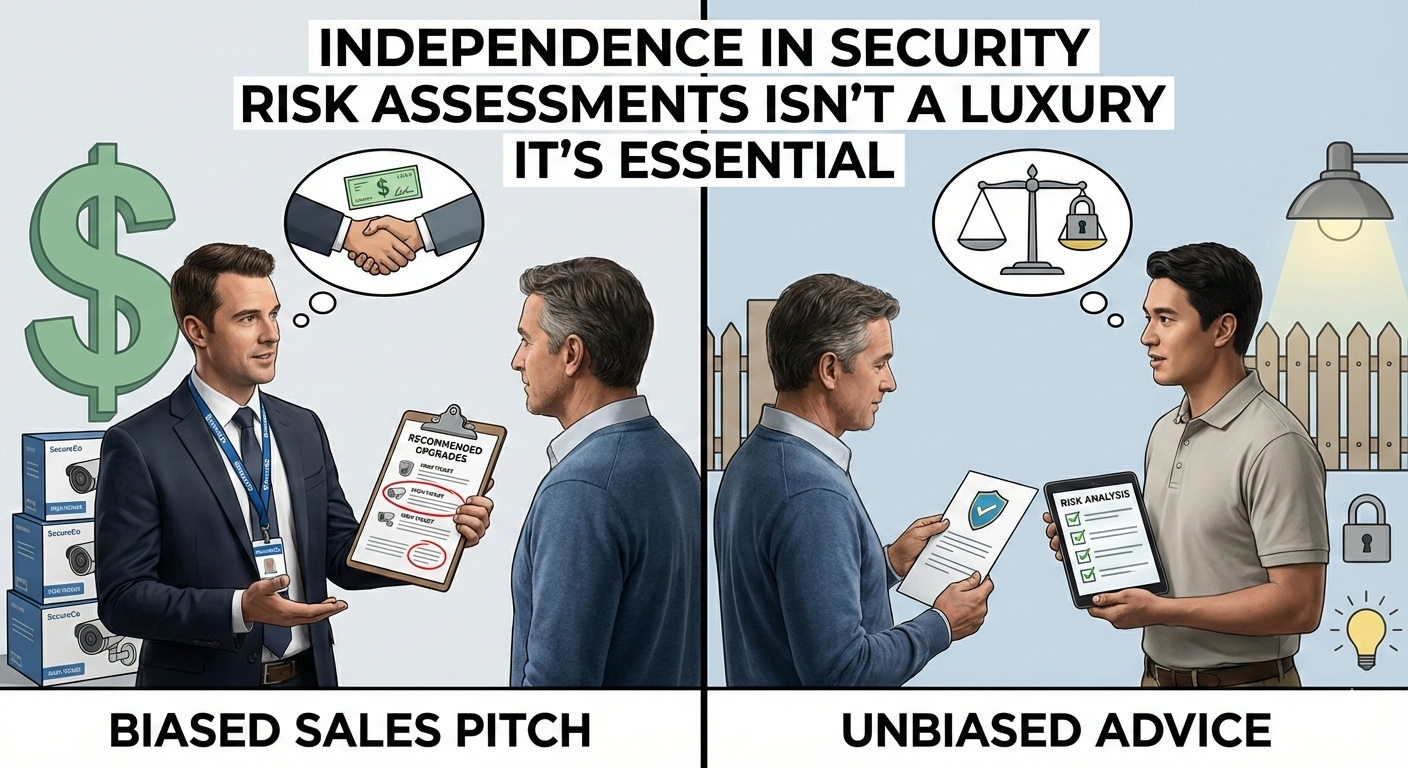
Let’s say a security company, ABC Security, hires an outside assessor, John, to do an assessment for one of their clients, a farm or another property. Such an arrangement might seem like a good idea, but there are problems with this approach.
First, where does the final assessment report go?
Security risk assessments contain highly sensitive information. The client being assessed may not even be aware that a third party is involved, yet their security details are now being shared beyond what they expected. Normally, the client should give clear permission for the assessment and decide who sees the report. However, when a security company commissions an external assessor, the client doesn’t always know who else will have access to their information.
Second, money plays a role in the process.
When a security company hires an outside assessor, the cost of the assessment might be lower than what an independent assessor would charge. Why? Because John, the assessor, knows he will get paid not only by the client but also by the installer or service provider. He proposes a low quote (price) for the client in the RFQ to secure the job, knowing he will receive a second payment later from the company that hired him. No one openly admits it, but such an arrangement is common practice in the security industry.
The real question we need to ask is
What does the company requesting the assessment actually want from the deal? Now, security companies approach me, asking me to conduct risk assessments on their behalf, bidding low to win the contract. They compensate me for my work, and I must ensure the risk assessment aligns with the interests of the company that originally contacted me.
However, Alwinco does not engage in this type of assessment.
This creates a major conflict of interest. The assessor should provide an honest and unbiased assessment of security risks. However, because the security company or installer pays him, he likely shapes his recommendations to benefit them rather than the client. For example, instead of listing the best security solutions for the client, he might suggest options that push the services or products of the company that hired him.
The biggest issue here is independence, or rather, the lack of it.
A true security risk assessment should be independent, with no hidden influences. But when a security company hires an assessor, it becomes an “in-house” process. The assessment is no longer about identifying the best security measures for the client; it becomes about benefiting the security company. The assessor is working to serve the company that pays him, not the client who actually needs the security advice.
This is why independent assessments are so important.

When the person doing the assessment has no ties to a security company, they can give honest recommendations based on real risks rather than financial incentives. Otherwise, the client might end up with security solutions that are more about business profits than real protection.
For over 20 years, we’ve proven that an independent risk assessment is the only way to get real, unbiased security insights. We don’t just look at security from the inside; we analyze it from the outside, the way a criminal would. This approach is what makes our assessments different. We stand alone because that’s the only way to give you the truth about your security risks.
Article written by Andre Mundell. # Independent security risk assessment
Newsletter subscription
Should you wish to learn more about our services offered or want more information on security risk assessments, please send us an email or kindly visit our website security meetings and subscribe to our Newsletter.
Written by Andre Mundell, independent security risk advisor. # security risk assessment Gauteng
Our security risk assessment projects are focused on the Gauteng Region, which includes Annlin, Bryanston, Midrand, and Sandton. Additionally, we cover Bloemfontein, Pietersburg, and Cradock.
Click here to read more about why invest in a security risk assessment